






How to digitalize the review of key CMC documents?

How to stop manually extracting data from thousands of CMC pdfs in Life Sciences? Smart automation turns raw documents into insights and actionable data:

  • Save time by surfacing key values and anomalies automatically
  • Extract tables, figures, metadata and text sections into validated, structured outputs
  • Integrate with analytics, QMS and compliance systems

Why do CMC Life Sciences teams automate pdf document handling?

Besides tangible ROI and productivity gains, smart automation dramatically frees up time of your professional teams and keeps their eyes on the things that really matters. 
time saving icon
Decrease human review and extraction time by 60%

Automated reviews rapidly identify and classifies required values, leading to a 60%+ reduction in human review time while increasing completeness, speed and reliability.

Speed up release cycles
Feed clean, structured data into compliance systems

Feeding clean, structured data into compliance systems and documents replaces brittle manual spreadsheets with traceable, searchable datasets that accelerate reporting and regulatory readiness.

Improving yield
Accelerate regulatory drafting

Clean, standardised and contextualised data enables the reliable use of LLMs or structured authoring tools for regulatory drafting and localisation of documents.

How you can achieve massive productivity gains in CMC workflows with limited setup?

Smart automation can be implemented on your current processes, tackling many small and repetitive tasks. Beyond a clear productivity ROI, smart automation frees up time for the Quality team and enables analytical breakthrough.
CMC Document stacked

No major process changes required, simply automate existing steps and workflows

Upload documents in their current formats into the automated workflow

Automated extraction models digest, sort and tag important sections, values and words

Tailor outputs and warnings to your needs. Review on screen or automatically export

Human-in-the-loop review delivers confidence scoring, quality control, and full traceability

Stability_DataPoints (1)

Automate extraction of information from CMC documents

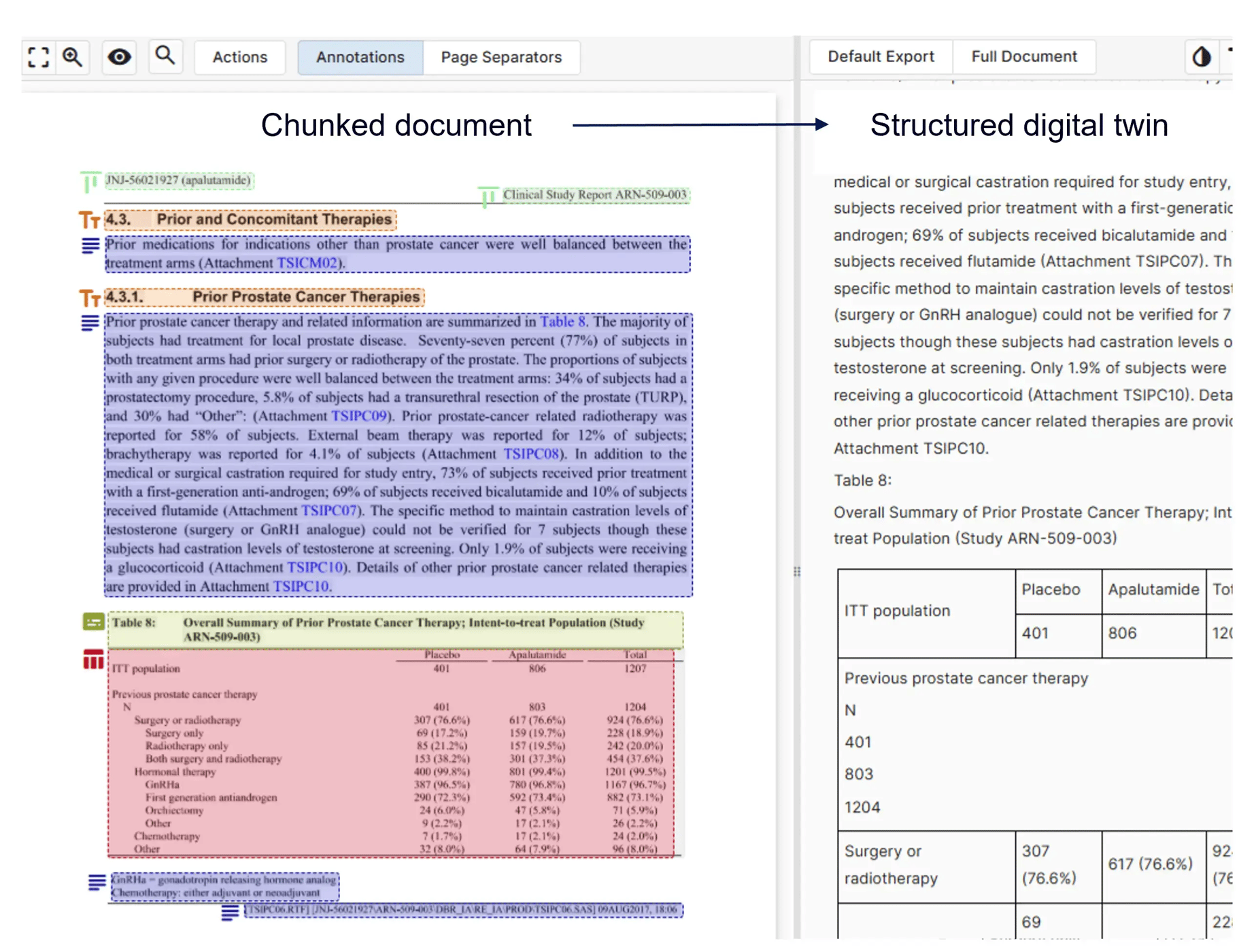
Trained machine learning models identify documents layout, structure and content to convert them into normalized, machine-ready outputs.

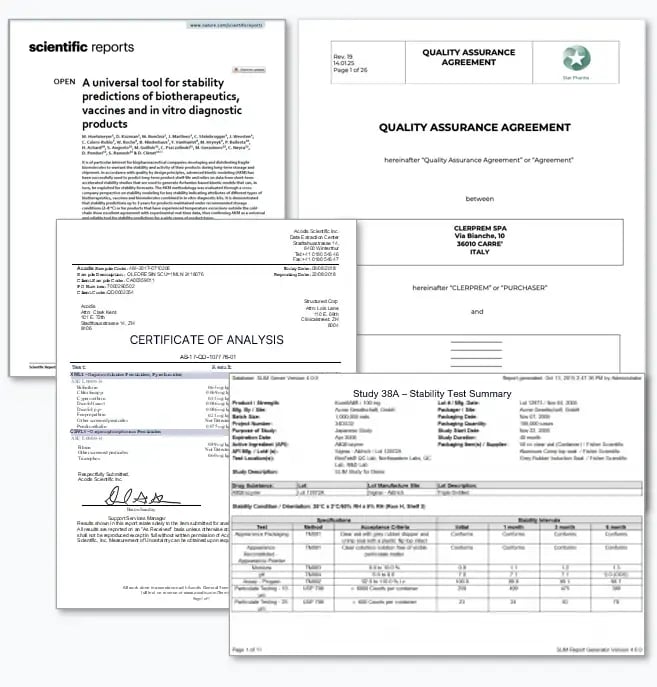
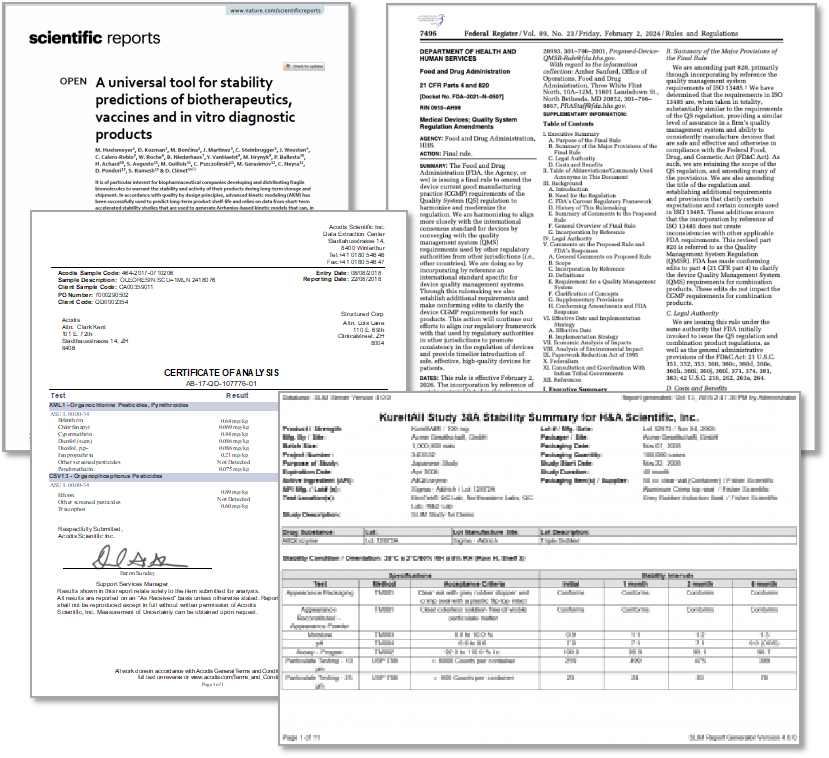
Compiling key information from stability reports, CoAs, Quality Agreements and SOPs.

Create your own rules and validation: business rules let you transform the data into actionable inputs for your team with your internal words and formats.

Automate compliance checks

Define a set of rules, value ranges or specific word that should trigger warnings. Scan thousands of documents in minutes.

For high-volume, instruction based documents like Batch Records, let machine-learning engine extract the rules: turn a paper batch record into a digital set of rules. 

Batch Record Checks 4 (1)
Clinical study chunking CMC

Accelerate regulatory dossier drafting

Turning documents into reusable, standardised and contextualised data enables to quickly feed summaries required for regulatory dossier. With link back to the source, it facilitates the search process and saves many hours.  

Based on Machine Learning Models Tailored to Quality & Regulatory Needs

Picture5

GxP compliance by design, providing full traceabiity, auditability and replicability

Highest accuracy for complex documents, through document & table specific models

Models are fine-tuned on your data for precision and privacy. Your models, your data.

Human-in-the-loop interfaces to ensure validity and compliance of data and models

Traceability back to the source, for auditing and versioning, and avoiding the risk of hallucination

Get in touch with us today

One platform for your dream solutions

How does phased implementation guarantee success?

Screenshot 2026-01-22 144041

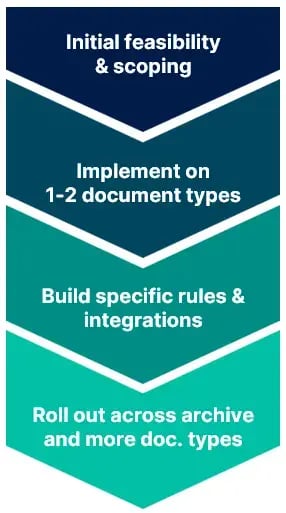
Breaking down complexity in steps:

1/ Scope desired outcome, document types, and system integration needs. 

  • Running test documents
  • Aligning on objectives and implementation

2/ Ingest a small set of PDFs to calibrate automated extraction and tagging models. 

  • Implement solution of a first product
  • Configurate rules and actions 

3/ Pilot data extraction and search accuracy, refining based on real user feedback.

  • Take user feedback to improve the solution
  • Define path and integration for scaling-up

4/ Expand and integrate with existing systems, scaling up to full document collections. 

  • Build integrations and train users
  • Roll-out across products and teams

Typical industry challenges

close-cross-symbol-in-a-circle

Highly variable PDF layouts and content types slow manual review. 

close-cross-symbol-in-a-circle

Blackbox automation risks missing important details or lacks traceability.

close-cross-symbol-in-a-circle

Scaling manual extraction processes is costly and error-prone.

close-cross-symbol-in-a-circle

Difficulty maintaining data accuracy and compliance as volumes grow.

How we solve it

checked

Flexible AI models adapt to layout variability for consistent extraction. 

checked

Confidence scoring, human review, and full traceability ensure reliable results.

checked

Automated workflows save resources, cut errors, and scale without additional headcount.

checked

Continuous validation, monitoring, and audit trails ensure compliance and data integrity at scale.

What Do our Customers Say about Acodis?

 The user friendly interface was simple to operate and did not require data engineering expertise.
Shannon M.
Digital Project Manager, Pharma
Very easy and fast implementation with different connection possibilities. 
Excellent Customer Service, a fast response time and solution
Vinyo D.
Project Manager IT
An outstanding data extraction solution—intuitive, flexible, and backed by excellent technical support. The team’s responsiveness and expertise made all the difference. Highly recommended!
George B.
Quality Manager, Pharma
Document processing solution to extract data from static documents for non-expert users
Thomas H.
Business Architect, Agrochemical

Certifications & Data Privacy

 
2024_03_MA_ISO Certificates
 

Get in touch with us today

One platform for your dream solutions

Frequently asked questions

How does Acodis ensure the accuracy of the extracted data, especially from handwritten or low-quality documents?

Acodis uses advanced AI, including Optical Character Recognition (OCR) and Natural Language Processing (NLP), to achieve high accuracy. For critical GxP processes, the system includes a "human-in-the-loop" validation step. This means that while the platform automates the initial data extraction, it can flag uncertain entries or specific fields for a mandatory review by a Quality expert. This combination of smart automation and human oversight ensures that data integrity is maintained, meeting the stringent requirements of regulated environments while still dramatically speeding up the overall process.

Can the system be configured to handle our company's specific templates and wide range of layouts from suppliers?

Yes, Acodis is designed to be highly configurable. During the implementation process, the platform is trained on your specific document types and templates, whether they are highly structured forms or semi-structured reports. The system learns to identify and extract the precise data points you need—such as specific test results, operator IDs, or material codes—regardless of their location in the document. This flexibility allows it to adapt to your existing processes and formats without requiring you to change your established documentation practices or those from your suppliers.

Does Acodis support GxP compliance and validation requirements?

Yes. Acodis is built to support GxP-regulated environments and aligns with GMP-compliant documentation requirements. The platform ensures traceability, complete audit trails, version control, and robust data integrity — all critical for regulated processes.

What types of documents and formats can Acodis handle, including handwritten or scanned files?

Acodis can handle a broad range of document types, including PDFs, Word files, Excel sheets, PowerPoint decks, scanned documents, images, & even handwritten text. Whether your documents are structured, semi-structured, or entirely unstructured, Acodis extracts the relevant data accurately. Even from complex formats like tables, multi-page reports, or low-quality scans.

Can Acodis integrate with our current systems (like LIMS, QMS, ERP)?

Yes. Acodis integrates seamlessly with existing enterprise systems such as LIMS, QMS, ERP, and other document or data platforms. For instance, we have a standard integration with Veeva. As a SaaS solution, we support flexible integration options including REST APIs, FTP, and other standard protocols, whether you're working in a cloud, hybrid, or on-premise environment.